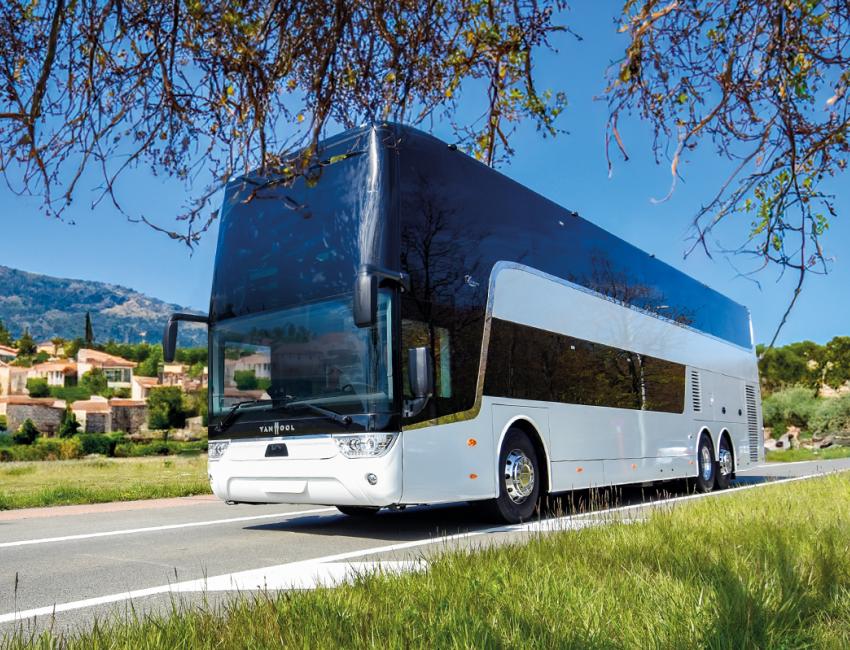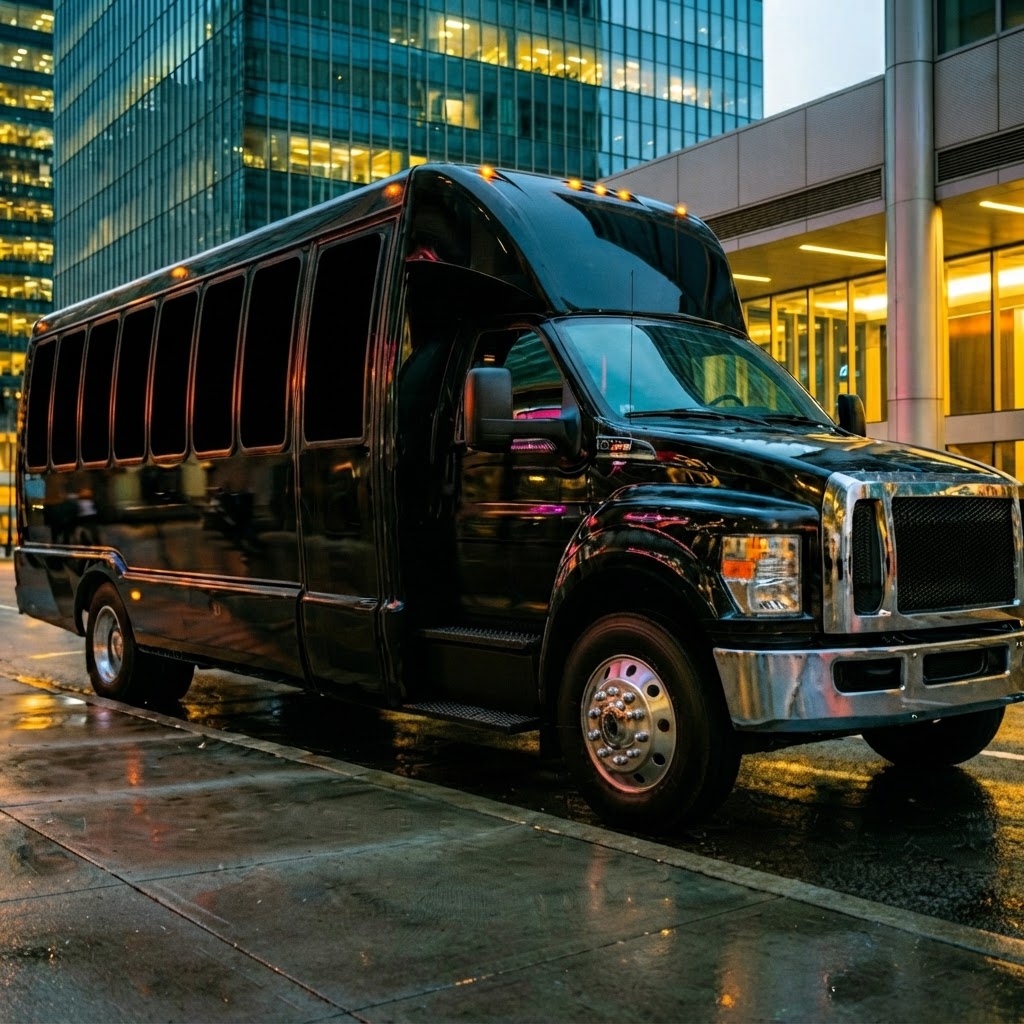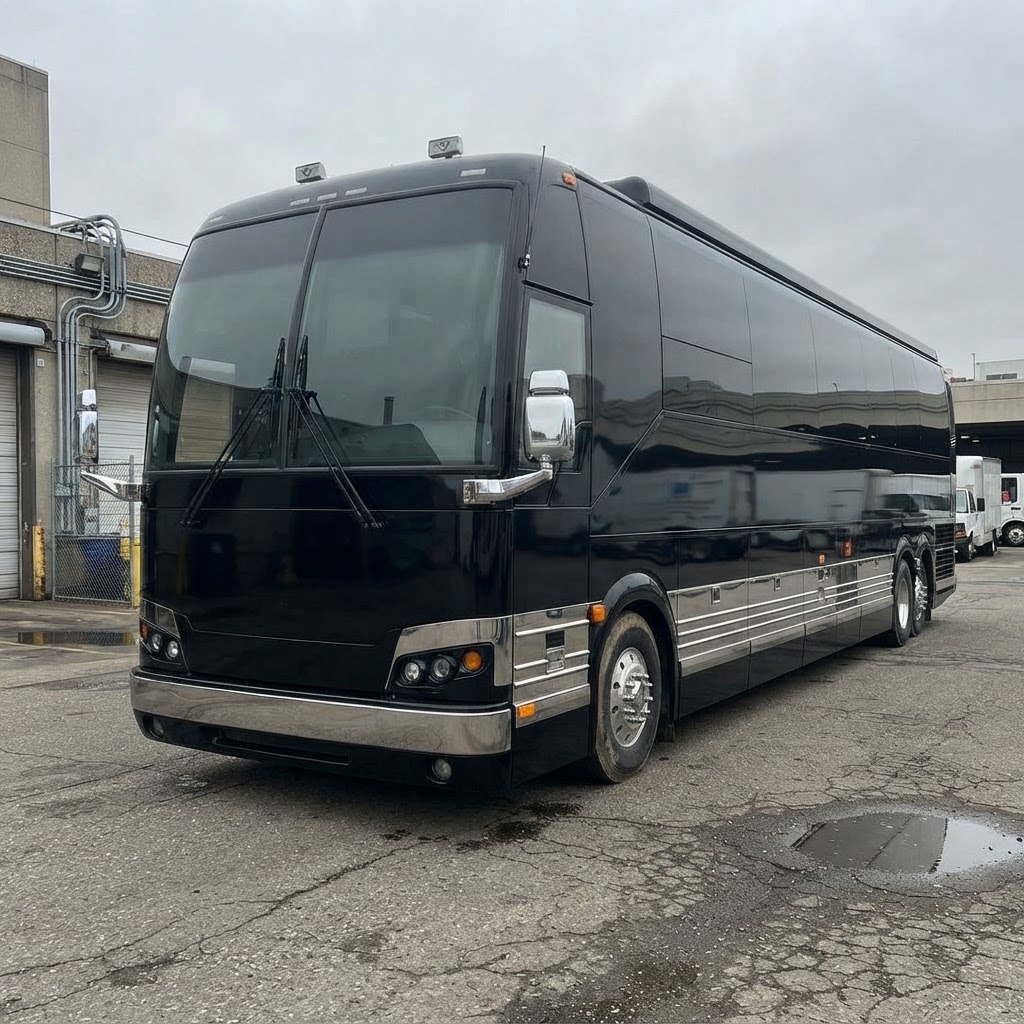
A sleeper bus can turn a demanding multi-city itinerary into a more practical transportation plan for touring artists, production crews and other travelers who need to move between destinations overnight.
But sleeper buses are highly specialized vehicles.
The number of bunks, passenger seating, lounge space, restroom setup, storage and onboard features can vary significantly from one vehicle to another.
Even the name can create confusion.
You may hear people use "sleeper bus," "entertainer coach," "band bus" or "tour bus" for similar vehicles, but those terms do not guarantee one standard layout.
And because every city is its own transportation market, sleeper bus availability in one location may be completely different from availability somewhere else.
Here is what to know before requesting a sleeper bus rental.
What Is a Sleeper Bus?
A sleeper bus is a chauffeured touring vehicle with sleeping accommodations for passengers or crew members.
Unlike a traditional passenger motor coach designed primarily around rows of forward-facing seats, a sleeper bus is generally arranged for life on the road.
Depending on the specific vehicle, its layout may include:
- Sleeping bunks
- A front or rear lounge
- Limited passenger seating
- An onboard restroom
- Storage for luggage or personal items
- Power connections
- Entertainment features
- A small food-preparation or refreshment area
None of these features should be assumed from the vehicle name alone.
The exact floor plan, legal capacity, bunk count and amenities must be confirmed for the sleeper bus being quoted.
Is a Sleeper Bus the Same as an Entertainer Coach, Band Bus or Tour Bus?
The terms often overlap, but they are not exact guarantees of a particular vehicle.
An entertainer coach is commonly a sleeper-style coach configured for touring artists and crew members.
A band bus may refer to the same type of vehicle when it is used by musicians.
A tour bus can mean an entertainer-style sleeper bus, but it can also describe an ordinary motor coach used for sightseeing or group tours.
That is why the name alone is not enough.
When requesting transportation, describe what the passengers actually need:
- Number of travelers
- Number of bunks required
- Seated passenger requirements
- Luggage and equipment
- Restroom requirements
- Lounge or workspace needs
- Power requirements
- Trailer request
- Complete itinerary
Those details are more useful than relying on a broad vehicle label.
Who Uses a Sleeper Bus?
Sleeper buses are most closely associated with touring entertainment and production work.
They are commonly requested for:
- Bands and musicians
- Solo artists and touring performers
- Touring crew members
- Theater productions
- Concert production teams
- Film and television crews
- Live-event personnel
- Speakers and traveling presentation teams
- Multi-city promotional tours
- Long-duration roadshows
Some sports, corporate or other professional groups may also consider a sleeper bus for a demanding multi-city schedule.
However, a sleeper bus is not automatically the best choice just because a trip is long.
Passenger count, seated capacity, legal travel requirements, luggage, equipment, schedule and local availability all need to be reviewed.
Is a Sleeper Bus a Self-Drive RV Rental?
No.
My Bus Rental provides sleeper bus transportation with a driver.
This is not a self-drive motorhome rental where the customer picks up the keys and operates the vehicle.
A sleeper bus is also not automatically the same as a recreational vehicle.
An RV is generally designed for recreational living and may include features intended for a campground or personal road trip.
A sleeper bus is generally designed around professionally driven group transportation and a touring schedule.
If you need a vehicle that you will drive yourself, a sleeper bus through My Bus Rental is not the correct service.
What Is the Difference Between a Sleeper Bus and a Motor Coach?
A traditional motor coach is designed primarily to move a larger passenger group in forward-facing seats.
It commonly includes an onboard restroom and underfloor luggage bays, although all features should still be confirmed.
A sleeper bus is designed around sleeping accommodations and touring use.
It may replace many of the passenger seats found in a motor coach with bunks, lounge areas, cabinets or other touring features.
A motor coach may make more sense when:
- The priority is seated passenger capacity
- A large group is traveling together
- Passengers need substantial luggage-bay space
- The trip is a daytime transfer, tour or event shuttle
- Sleeping bunks are not needed
A sleeper bus may make more sense when:
- A smaller touring party is traveling overnight
- The itinerary covers several cities
- Bunks are an essential requirement
- The travelers need a touring-style layout
- The trip involves artists, crew members or production personnel
For more information about traditional coaches, read Motor Coach Rental Guide: What Is a Motor Coach & When Should You Rent One?.
How Many Passengers Fit in a Sleeper Bus?
There is no universal sleeper bus passenger capacity.
Capacity depends on the specific vehicle and its legal seating configuration.
A coach with more bunks or a larger lounge may have fewer traditional passenger seats.
The number of people who can sleep in the vehicle may also be different from the number who can be transported under a particular operating plan.
Never estimate capacity based on the vehicle's exterior size.
Provide the exact number of passengers when requesting a quote and confirm:
- Legal passenger capacity
- Number of approved passenger seats
- Number of bunks
- Sleeping arrangement
- Any seating or occupancy restrictions
If the group is too large for one sleeper bus, the trip may require multiple vehicles or a different combination of vehicle types.
How Many Bunks Does a Sleeper Bus Have?
Bunk count varies by vehicle and floor plan.
Some sleeper buses are designed around a larger number of compact bunks. Others may devote more interior space to a lounge, seating, storage or private areas.
Do not assume that every traveler will have a bunk unless the required number has been included in the request and confirmed in writing.
When comparing sleeper bus options, ask about:
- Total number of bunks
- Bunk dimensions when important
- Privacy curtains or partitions
- Individual lighting
- Power access near bunks
- Climate-control arrangement
- Bedding expectations
- Rules for personal items
All of these details can vary.
Can Passengers Use the Bunks While the Bus Is Moving?
Do not assume that every bunk can be occupied while the vehicle is moving.
Seat-belt requirements, passenger-occupancy rules, vehicle configuration and operating policies may vary by jurisdiction and vehicle.
Passengers must follow the safety instructions and occupancy requirements confirmed for the specific trip.
The presence of a bunk does not override applicable safety rules.
If overnight movement is central to the itinerary, disclose that when requesting the quote so the proposed schedule and vehicle setup can be reviewed.
Do Sleeper Buses Have Bathrooms?
An onboard restroom may be available on a sleeper bus, but it is not something to assume.
Restroom type and configuration can vary.
Some vehicles may have a compact restroom, while other layouts may handle interior space differently.
If an onboard restroom is required, include that requirement in the quote request and make sure it is confirmed for the specific vehicle.
Even when a restroom is available, planned stops may still be necessary for passenger comfort, cleaning, servicing and the overall itinerary.
Do Sleeper Buses Have Showers?
Some specialized sleeper buses may have a shower, but showers are not a standard feature across all sleeper buses.
Never assume a shower is included because a vehicle is described as an entertainer coach or tour bus.
If a shower is important, request it specifically and confirm:
- Whether the vehicle has one
- How water capacity affects use
- Whether servicing is required
- Whether there are operating restrictions
Tour planners should also consider shower access at hotels, venues or other scheduled facilities.
Do Sleeper Buses Have Kitchens?
Some sleeper buses may include a small refreshment or food-preparation area.
That does not necessarily mean the vehicle has a full residential kitchen.
Possible features may include a refrigerator, microwave, sink, counter or storage cabinets, but availability and permitted use vary.
Cooking appliances, open flames and high-power personal appliances may be restricted.
If food storage or preparation is important, list the exact requirement and confirm what is available and permitted before the trip.
What Amenities Are Available on a Sleeper Bus?
Amenities vary by vehicle.
Depending on the specific sleeper bus, requested features may include:
- Sleeping bunks
- Lounge seating
- Restroom
- Climate control
- Wi-Fi
- USB charging ports
- Power outlets
- Televisions or entertainment systems
- Refrigerator
- Microwave
- Sink
- Work surface
- Interior storage
- Exterior storage
None of these amenities are guaranteed by the words "sleeper bus."
Wi-Fi performance may also depend on equipment, cellular coverage, route and local signal conditions.
If the group needs reliable power for computers, audio equipment, medical equipment or production work, provide the equipment details and power requirements in advance.
How Much Luggage and Equipment Can a Sleeper Bus Carry?
Storage varies by coach design.
A sleeper bus may use interior and lower storage areas differently from a traditional passenger motor coach.
Bunks, lounges, mechanical systems, water systems and touring features can affect available luggage space.
Provide a realistic inventory that includes:
- Suitcases
- Carry-on bags
- Instruments
- Wardrobe cases
- Merchandise
- Production cases
- Audio equipment
- Lighting equipment
- Sports equipment
- Oversized or unusually shaped items
Do not assume that passenger capacity and equipment capacity can both be maximized at the same time.
The complete passenger-and-cargo requirement must be reviewed together.
Can a Sleeper Bus Pull a Trailer?
A trailer may be available for some sleeper bus trips, but it must be requested and confirmed.
Not every vehicle is configured or approved to tow a trailer.
Trailer availability, size, weight limits, loading plan, parking requirements and route restrictions can all affect the trip.
If a trailer may be needed, provide:
- Equipment inventory
- Estimated weights when available
- Case dimensions
- Loading and unloading locations
- Venue access information
- Parking plan
- Complete route
Do not wait until the travel date to disclose instruments, production cases or merchandise that may require a trailer.
Are Sleeper Buses Good for Bands and Touring Musicians?
Yes. Bands and touring musicians are among the most common users of sleeper buses.
A sleeper bus may help a touring party move between venues while keeping people and essential personal belongings together.
It can be particularly useful for an itinerary involving several cities and overnight travel.
However, the transportation plan needs to account for more than the performers.
Include:
- Artists
- Tour manager
- Supporting musicians
- Audio crew
- Lighting crew
- Merchandise staff
- Personal luggage
- Instruments
- Production cases
- Trailer requirements
The correct plan may involve one sleeper bus, multiple sleeper buses or a combination of passenger and equipment transportation.
Are Sleeper Buses Good for Production Crews?
They can be.
Film, television, theater, concert and live-event crews may use sleeper buses when their schedules require movement between several locations.
The vehicle may provide sleeping space and a place for crew members to travel together, but it should not be treated as a substitute for every production need.
Workspace, power, connectivity, equipment storage, dressing space and passenger capacity all need separate confirmation.
If the crew works with sensitive, fragile or high-value equipment, disclose the handling and storage requirements before booking.
Can Sports Teams or Corporate Groups Rent a Sleeper Bus?
Possibly.
A sports team, corporate roadshow or specialized professional group may consider a sleeper bus for a long multi-city schedule.
But a traditional motor coach may provide more seated capacity and luggage space for many team or corporate trips.
A sleeper bus may have fewer approved passenger seats because interior space is devoted to bunks and lounge areas.
Before choosing one, compare:
- Passenger count
- Required bunks
- Seated travel needs
- Luggage and equipment
- Accessibility requirements
- Trip duration
- Route
- Budget
- Availability
The specialized layout should solve a real itinerary need rather than simply serve as a vehicle preference.
Can a Sleeper Bus Be Used for a One-Way Trip?
Yes, depending on availability and routing.
A sleeper bus may be requested for a one-way movement, round trip or multi-city itinerary.
However, a one-way passenger trip does not necessarily mean the vehicle only travels in one direction.
The bus may need to travel from another location to begin the trip or reposition after the final drop-off.
Those vehicle movements can affect mileage, driver planning, availability and pricing.
Provide the exact starting location, final destination and schedule so the complete movement can be evaluated.
Are Sleeper Buses Only for Long-Distance Trips?
Sleeper buses are most useful when their specialized layout supports a demanding or multi-city itinerary.
They can be used for a local movement when available, but they may not be the most practical choice for a simple airport transfer, dinner outing or short event shuttle.
For a short trip, another vehicle may better match the passenger count and luggage requirements.
Read What Size Charter Bus Do I Need? for help comparing vehicle sizes.
Can a Sleeper Bus Travel Overnight?
It may be possible to plan overnight movement, but the schedule must be reviewed in advance.
An overnight itinerary depends on more than the presence of bunks.
It may be affected by:
- Driver hours-of-service requirements
- Route and total mileage
- Pickup and performance times
- Required breaks
- Traffic and weather
- Parking and staging access
- Vehicle servicing
- Relief-driver requirements
- Hotel arrangements
Do not create an itinerary that depends on nonstop movement without allowing the transportation schedule to be reviewed.
Do Passenger Bunks Replace Driver Rest or a Driver Hotel Room?
No.
Passenger bunks are for the touring party and do not replace driver hours-of-service requirements.
The driver must receive the legally required off-duty time and rest.
Depending on the itinerary, the trip may require a relief driver, schedule adjustment, overnight stop or hotel room for the driver.
When overnight lodging is required for the driver, the group is responsible for arranging and paying for an appropriate private hotel room unless the written transportation agreement states otherwise.
The final itinerary should be provided at least 72 hours before service so timing, mileage, stops and driver requirements can be reviewed.
Any later itinerary change should be requested in writing and may affect feasibility or cost.
What Should Be Planned for Overnight Parking and Vehicle Service?
Sleeper buses may require more planning than ordinary passenger vehicles when they remain with a group for several days.
The itinerary may need suitable locations for:
- Overnight parking
- Safe passenger boarding
- Vehicle access
- Restroom servicing
- Water service when applicable
- Waste disposal when applicable
- Shore power when applicable
- Fueling
- Cleaning
- Trailer parking
Not every hotel, venue or downtown street can accommodate a full-size sleeper bus and trailer.
Confirm parking and access with hotels and venues before finalizing the tour plan.
What Venue Information Is Needed for a Sleeper Bus?
Venues may have specific rules for tour buses, loading areas and overnight parking.
Provide available information about:
- Bus entrance
- Loading dock
- Gate or security procedures
- Parking location
- Arrival window
- Trailer access
- Height or length restrictions
- Idling restrictions
- Shore-power access when requested
- Contact person at the venue
An arena loading area, theater alley, festival field and hotel entrance can each require a different approach.
Advance coordination helps prevent delays and access problems on the service date.
Can You Rent More Than One Sleeper Bus?
Yes, subject to availability.
Larger tours may need separate vehicles for artists, musicians, dancers, technical crew or other teams.
When requesting multiple sleeper buses, explain how passengers and equipment will be divided.
Also identify whether every vehicle needs the same layout and amenities.
Because sleeper buses are specialized, matching several vehicles may be more difficult than finding one.
Early planning is especially important for multi-bus tours.
Are Sleeper Buses ADA Accessible?
ADA-accessible features are not standard across all sleeper buses.
A traditional touring layout may include narrow aisles, steps and compact sleeping areas.
If a passenger needs a wheelchair lift, space to remain in a wheelchair, an accessible restroom or another accommodation, include the exact requirement at the beginning of the quote process.
Accessibility must be reviewed for the specific vehicle and itinerary.
Do not assume a standard sleeper bus can meet a passenger's needs without advance confirmation.
For more information, read ADA Charter Bus Rental Guide: Wheelchair-Accessible Motor Coaches Explained.
Can Passengers Drink Alcohol on a Sleeper Bus?
Alcohol may only be allowed when it is legal and approved in advance.
Rules can depend on the jurisdiction, passenger ages, itinerary and vehicle requirements.
Do not bring alcohol onto the vehicle without written approval.
The group remains responsible for lawful and respectful conduct.
Smoking is not permitted.
Does Sleeper Bus Availability Vary by City?
Yes.
Every city is its own transportation market.
Sleeper buses are highly specialized, so the available vehicle in Nashville may not have the same layout or features as one available for a trip beginning in Los Angeles, New York City, Atlanta, Chicago, Dallas, Las Vegas, Miami or another market.
Availability can depend on:
- Starting city
- Travel dates
- Tour season
- Length of the trip
- Routing
- Required bunk count
- Passenger capacity
- Requested amenities
- Trailer needs
- Current demand
My Bus Rental services 49 states, but that does not mean the same sleeper bus configuration is available in every city.
Each request must be evaluated using the actual trip details.
How Much Does It Cost to Rent a Sleeper Bus?
There is no single nationwide sleeper bus price.
Pricing may depend on:
- Starting city
- Travel dates
- Number of service days
- Total mileage
- Route
- Vehicle positioning
- Bunk and capacity requirements
- Driver schedule
- Relief-driver needs
- Driver hotel requirements
- Parking and permits
- Trailer request
- Vehicle servicing
- Current availability
A multi-week tour involving several cities is different from a one-night movement between two nearby destinations.
Because every city is its own transportation market, two similar itineraries beginning in different locations may have different pricing and availability.
For more information about transportation pricing factors, read How Much Does It Cost to Rent a Charter Bus?.
When Should You Book a Sleeper Bus?
Book as early as the tour schedule allows.
Sleeper buses are a specialized part of the transportation market, and the exact configuration a group needs may have limited availability.
Early planning becomes especially important when the trip requires:
- A specific number of bunks
- Several sleeper buses
- A trailer
- ADA-accessible features
- Particular power or storage capabilities
- A long multi-city itinerary
- Service during a major touring season or event period
Availability is first-come, first-served and is not secured until the reservation requirements in the written confirmation are completed.
My Bus Rental reservations generally require a 30% deposit at written confirmation. The remaining balance is generally due 30 days before service. Trips booked within 30 days generally require full payment.
Read When Should You Book a Charter Bus? for more guidance about timing and availability.
What Information Should I Provide for a Sleeper Bus Quote?
Provide as much detail as possible, including:
- Travel dates
- Starting city
- Every destination
- Pickup and drop-off times
- Venue schedule
- Passenger count
- Required number of bunks
- Required passenger seating
- Luggage inventory
- Instrument and equipment inventory
- Trailer request
- Restroom or shower requirement
- Power and connectivity needs
- Accessibility requirements
- Hotel and overnight parking plan
- Venue access information
- Contact person for the trip
If the itinerary is still developing, provide the best available version and clearly identify what may change.
Major changes to cities, mileage, dates or service hours may change the vehicle plan and quote.
For an overview of the process, read What Happens After You Request a Charter Bus Quote?.
Is a Sleeper Bus Right for Your Trip?
A sleeper bus may be the right choice for a touring artist, band, production crew or professional team moving through several cities on a demanding schedule.
It provides a specialized touring layout that an ordinary motor coach, minibus or Sprinter van does not.
But choosing one requires more than asking for a bus with beds.
The bunk count must work.
The legal passenger capacity must work.
The luggage and equipment must fit.
The route must be practical.
The driver schedule must comply with hours-of-service requirements.
And every required feature must be confirmed for the specific vehicle.
At My Bus Rental, we review the passengers, bunks, equipment, itinerary, cities and timing to help determine which transportation options make sense.
Planning a concert tour, production movement or multi-city trip? Request a sleeper bus quote from My Bus Rental and tell us about your itinerary.